Kate’s Corner
Understanding Notarization: What It Does and Does Not Confirm
Understanding Notarizing Documents: What It Really Means Many people believe that notarizing a document makes it “official” or confirms that everything in it is true. That’s not exactly how it works. Understanding what notarization actually does and doesn’t do can help avoid confusion and mistakes. 1. A notary verifies identity and witnesses signatures. A notary public or commissioner of oaths is authorized to: Confirm the identity of the person signing Witness the signature being made...
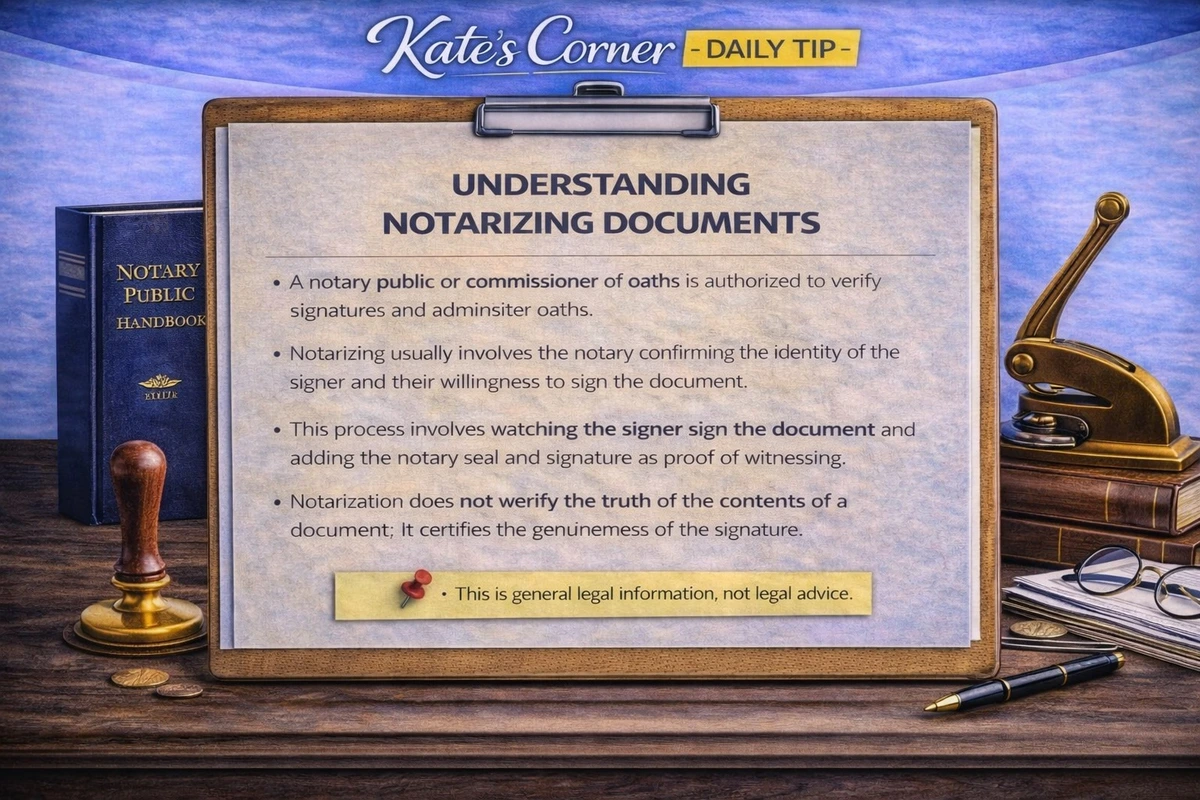
Understanding Notarizing Documents: What It Really Means
Many people believe that notarizing a document makes it “official” or confirms that everything in it is true.
That’s not exactly how it works.
Understanding what notarization actually does and doesn’t do can help avoid confusion and mistakes.
- A notary verifies identity and witnesses signatures. A notary public or commissioner of oaths is authorized to:
- Confirm the identity of the person signing
- Witness the signature being made
- Administer oaths or affirmations where required
This helps ensure that the person signing the document is who they say they are.
- The document must be signed in front of the notary
In most cases, the notary must watch the signer sign the document.
If a document is already signed, the notary may require the person to:
- Sign again, or
- Acknowledge that the signature is theirs
3. Notarization does NOT confirm the contents are true
This is one of the biggest misconceptions.
Notarization:
- Does not verify that the information in the document is accurate
- Does not mean the notary has reviewed or approved the contents
It only confirms:
👉 the identity of the signer
👉 that the signature was properly witnessed
4. Not all documents require notarization
Some documents must be commissioned or notarized, such as:
- Affidavits
- Statutory declarations
Others may only require a signature.
It’s important to confirm what is actually required before attending an appointment.
5. Proper identification is required
To notarize a document, the signer must provide valid identification.
Typically, this includes:
- Government-issued photo ID, Health cards are not allowed.
Without proper ID, a notary cannot proceed.
Why this matters
Notarizing a document incorrectly or misunderstanding the process can lead to:
- Delays
- Rejected documents
- Legal issues
Knowing what notarization actually does helps ensure everything is completed properly the first time.
Final note
This is general legal information, not legal advice.